They Shall Not Pass – Cable Street 1936
A historical feature film about courage, solidarity, and the antifascist resistance in London’s East End — inspired by true events.
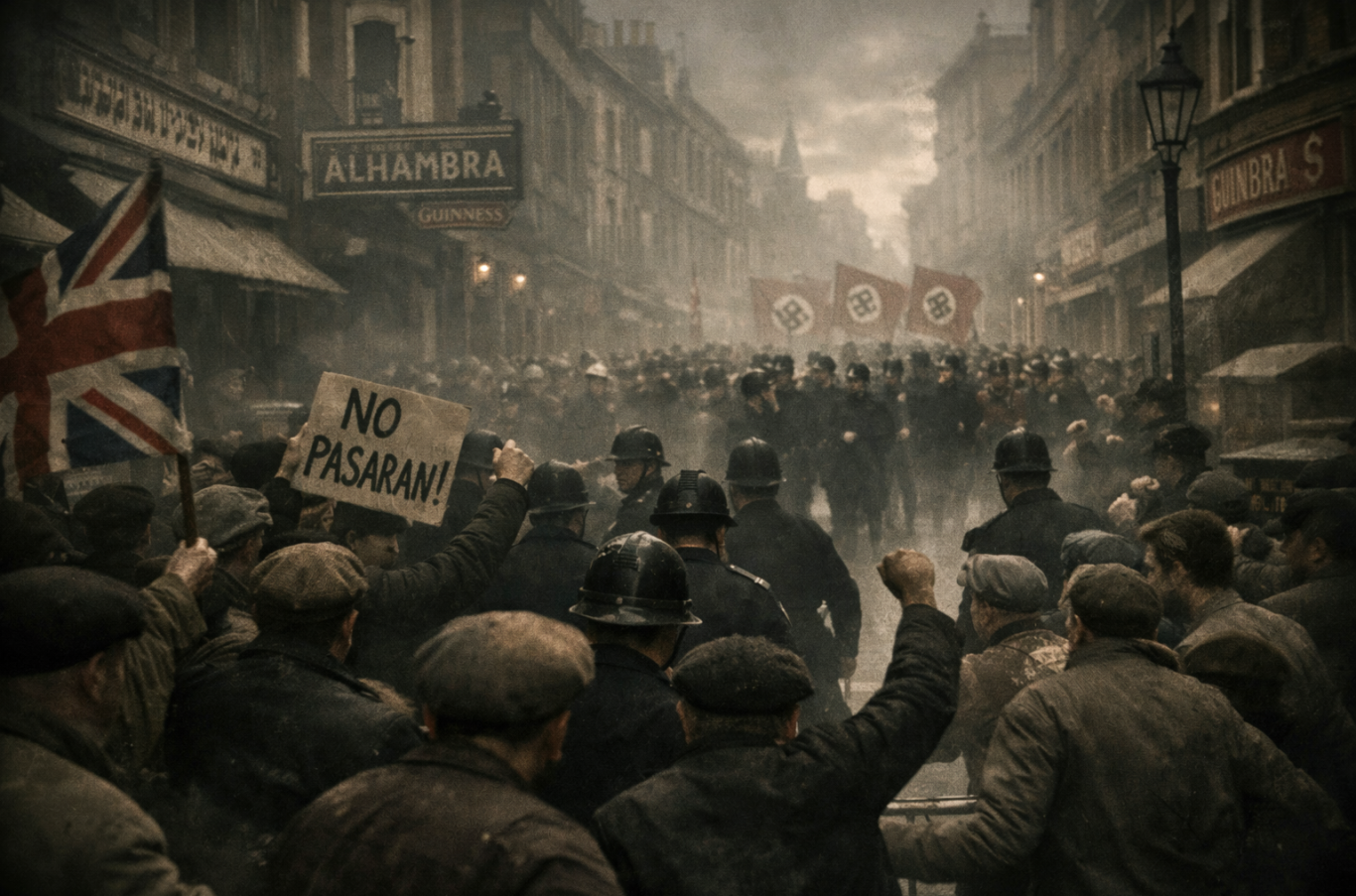
Synopsis short
London, 1936. While fascist movements gain strength across Europe, the Jewish and working‑class communities of the East End face growing threats. When Oswald Mosley’s British Union of Fascists announces a march through Cable Street, an unlikely alliance of residents, dockworkers, Irish laborers, Jewish families, and political activists forms to stop them.
As tensions rise, friendships are tested, loyalties questioned, and ordinary people are forced to decide whether they will stand by — or stand up. The confrontation on Cable Street becomes a defining moment of collective resistance, echoing far beyond the neighborhood and into history.
Why now?
The story of Cable Street is more relevant than ever. Across the world, societies are once again confronted with polarization, disinformation, and the rise of extremist ideologies. The film reminds us that democracy is not defended by institutions alone — but by people who refuse to look away.
“They shall not pass” is more than a slogan from 1936. It is a timeless message about solidarity, courage, and the power of communities to resist hatred.
Look & Feel
They shall not pass The film blends historical authenticity with a modern cinematic sensibility:
Gritty, atmospheric London streets — narrow alleys, markets, and tenements alive with texture and detail.
Warm, intimate interiors — capturing the emotional core of families and friendships.
Dynamic crowd sequences — choreographed to show the scale and tension of the uprising.
Muted, earthy color palette — inspired by period photography and early color film processes.
A score that mixes orchestral themes with subtle folk influences — grounding the story in its cultural roots.
The visual language aims for a balance between realism and emotional resonance — immersive, human, and cinematic.